Method
Dough Mixing & Gluten Development: In a mixing bowl of spiral mixer, combine SwissBake® T55 Flour, SwissBake® T150 Flour, le'sourdo® Miel Native and fine sea salt. Add crumbled fresh yeast, honey, vegetable oil & chilled water. Mix on slow speed for approximately 4 minutes until the flour absorbs the liquid and the ingredients come together into a firm dough. Increase the mixer to fast speed and knead for another 6–8 minutes until the dough develops a smooth, elastic structure. The finished dough should remain relatively stiff compared to conventional bread dough, providing the strength required for shaping and achieving the characteristic chewy bagel texture.
Bulk Fermentation & Dough Resting: Transfer the prepared dough into a lightly oiled container or dough tub. Cover properly to prevent surface drying and allow it to rest at room temperature for approximately 30 minutes. This resting period helps relax the dough structure before dividing and shaping.
Dividing & Pre-Shaping: Transfer the rested dough onto a clean work surface and divide it into uniform portions of approximately 120g each. Round every portion into a tight, smooth dough ball, ensuring consistent surface tension. Cover the dough balls with a damp cloth and allow them to rest for 15 minutes to relax the gluten and facilitate shaping.
Bagel Shaping: Using your thumb, create an opening through the centre of each rested dough ball. Gently rotate and stretch the dough outward to form an even ring, maintaining a central opening approximately 4cm to 5cm wide. This helps prevent the opening from closing during proofing and baking. Arrange the shaped bagels on parchment-lined baking sheets, leaving sufficient space between each piece.
Proofing & Cold Rest: Cover the shaped bagels loosely and allow them to proof at room temperature for approximately 30 minutes, until slightly puffy. Transfer the proofed bagels to a refrigerator maintained at 4°C and chill for 2 hours. This cold-resting stage supports the development of the characteristic chewy texture and crust blistering during the subsequent boiling and baking stages.
Preparation of Honey & Baking Soda Boiling Bath: In a wide, deep kettle or suitable cooking vessel, combine water, honey & baking soda. Heat the mixture to approximately 95°C to 100°C, maintaining a gentle rolling simmer. Ensure the ingredients are dissolved and the boiling bath is ready before removing the chilled bagels from refrigeration.
Boiling the Bagels: Carefully lower the chilled bagels into the simmering honey and baking soda solution in small batches, ensuring sufficient space for movement. Boil each bagel for approximately 30–45 seconds on the first side, then gently turn it overusing a slotted spoon and boil for another 30–45 seconds. This boiling process gelatinizes the outer surface of the dough, contributing to the bagels' distinctive chewy crust and smooth exterior.
Wheat Bran Topping: Remove the boiled bagels from the water using a slotted spoon and allow any excess liquid to drain briefly. Transfer them directly onto parchment-lined baking trays. While the surface is still moist and slightly sticky, generously sprinkle coarse wheat bran over the top of each bagel, allowing the topping to adhere evenly.
Baking: Immediately transfer the prepared bagels into a preheated deck oven or convection oven set at 210°C to 220°C. Bake for approximately 18–22 minutes, until the bagels develop a deep golden-brown colour with a firm, crisp and taut crust. No additional oven steam is required, as the preceding boiling stage provides the necessary surface gelatinization.
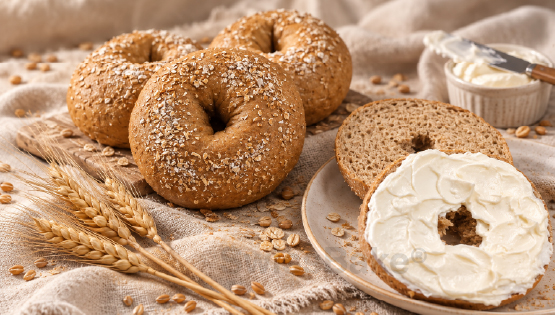
Cooling & Serving: Remove the baked bagels from the oven and transfer them onto wire cooling racks. Allow them to cool completely before slicing to preserve the internal crumb structure. Serve plain, toasted or paired with cream cheese spreads and a variety of savoury fillings for breakfast, sandwich and café menu applications.

 BAKE TEMP :
 MIXING TIME :
 BAKE TIME :
 PREP TIME :