2. Is T150 flour the same as whole wheat flour?
Yes, T150 flour is essentially equivalent to whole wheat flour in the French classification system.
It contains the full grain, including bran and germ, making it more nutritious and fibre-rich than refined flours.
It contains the full grain, including bran and germ, making it more nutritious and fibre-rich than refined flours.
3. What is T150 flour used for?
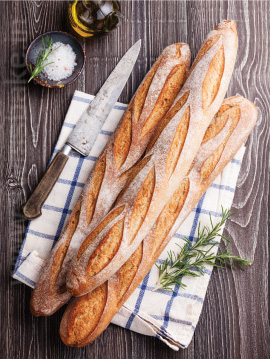
T150 flour is used for whole grain breads, rustic loaves, and high-fibre baked products.
It is ideal for:
It is ideal for:
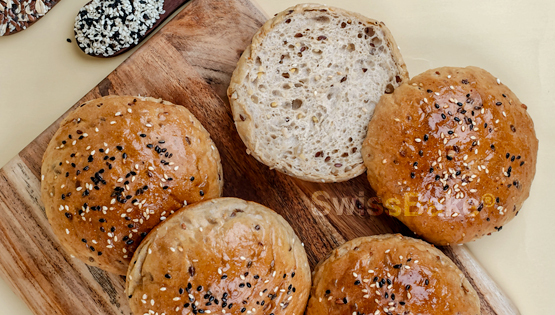
- Whole wheat bread
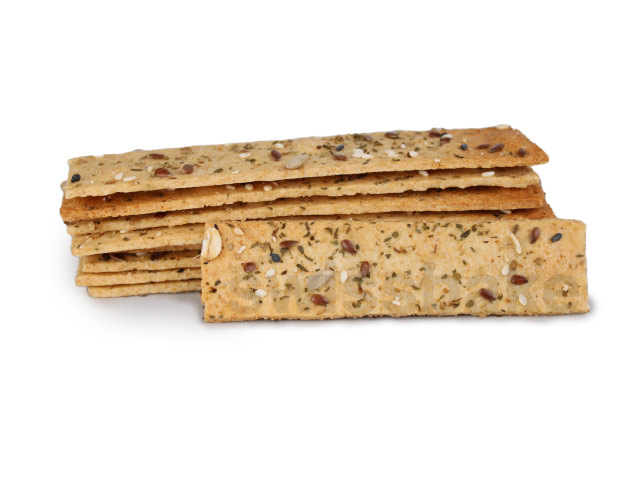
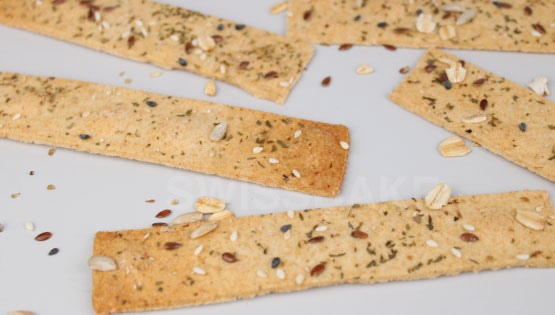
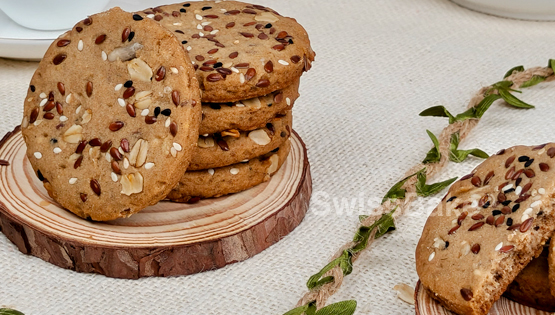
- Multigrain cookies and rustic loaves
- High-fibre bakery products
4. Is T150 flour good for sourdough?
Yes, T150 flour is excellent for sourdough baking due to its high mineral content and nutrient density.
It supports strong fermentation activity and enhances flavour, though it is often mixed with lighter flours for better dough handling.
It supports strong fermentation activity and enhances flavour, though it is often mixed with lighter flours for better dough handling.
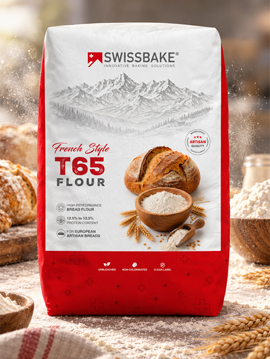
5. What is the difference between T150 and T65 flour?
6. Can I use T150 flour for cakes or pastries?
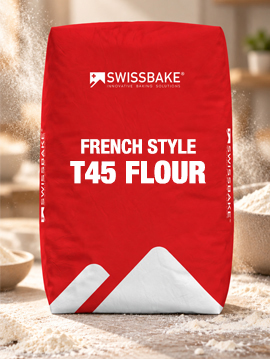
No, T150 flour is not suitable for cakes or delicate pastries due to its coarse texture and high fibre content. For softer baked goods, you can use T45 flour, which is more refined and better suited for light textures.
7. Why is T150 flour darker in colour?
T150 flour is darker because it contains the bran and germ of the wheat grain. These components add fibre, nutrients, and a deeper flavour, resulting in a darker appearance compared to refined flours.
8. Can I substitute T150 flour for regular flour?
Yes, but it is best to partially substitute rather than fully replace regular flour.
Using 100% T150 can result in dense and heavy baked products, so it is often blended with refined flours for better texture and rise.
Using 100% T150 can result in dense and heavy baked products, so it is often blended with refined flours for better texture and rise.
9. Is T150 flour healthier than other flours?
Yes, T150 flour is considered healthier as it retains the whole grain, providing more fibre, vitamins, and minerals.
It is commonly used in health-focused and whole grain baking applications.
It is commonly used in health-focused and whole grain baking applications.