How to Reduce Bakery Production Cost Without Losing Quality
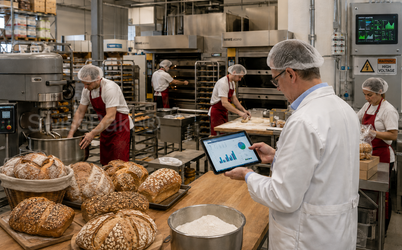
A more effective approach is to focus on reducing bakery production cost through better processes, improved efficiency, and smarter baking ingredient management. The key is to lower operational expenses without compromising the quality, consistency, and taste that customers expect.
This article explores practical strategies bakeries can adopt to improve profitability while maintaining high production standards.
Understanding the Key Factors Driving Bakery Production Cost
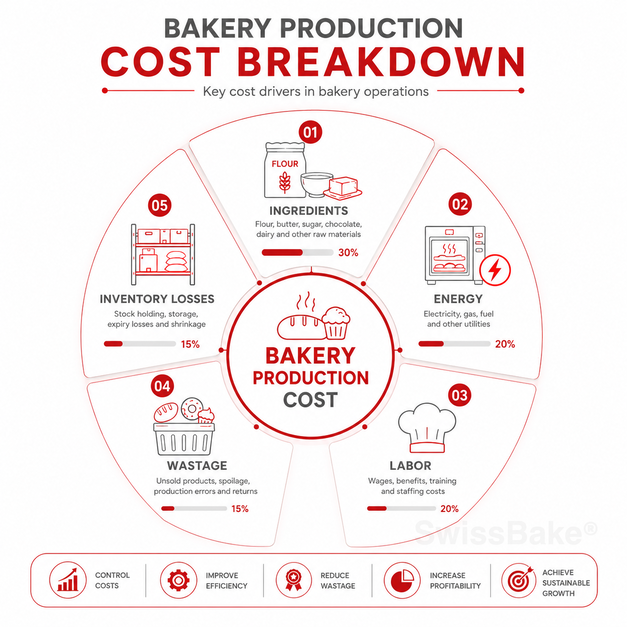
Several factors contribute to increasing bakery production costs today:
- Rising prices of flour, fats, dairy products, chocolate, and other ingredients
- Increased energy costs for mixers, proofers, ovens, and refrigeration systems
- Labor shortages leading to higher wages and training expenses
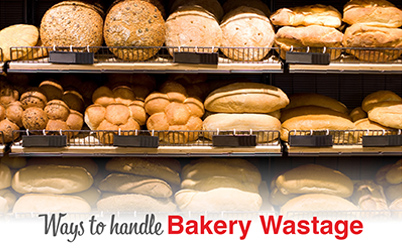
- Product wastage due to inconsistent production processes
- Inventory losses caused by poor stock management
Reducing costs effectively requires a holistic view of bakery operations rather than focusing on a single expense category.
How Recipe Standardization Helps Control Costs?
One of the most overlooked causes of rising production expenses is inconsistency in baking recipes and production methods.
When different staff members follow slightly different procedures, the results can vary from batch to batch. This inconsistency often leads to:
- Product defects
- Rework and remakes
- Increased ingredient consumption
- Customer complaints
- Higher wastage levels
Using standardized formulations allows bakeries to:
- Predict ingredient consumption more accurately
- Reduce product variation
- Improve quality consistency
- Minimize costly production errors
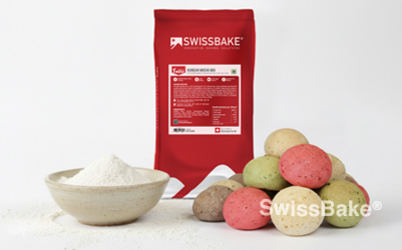
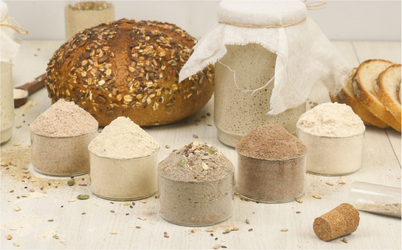
Many commercial bakeries also rely on solutions such as bread premix and cake premixes to simplify production and ensure repeatable results across multiple production shifts.
Bakery Inventory Management: Reducing Waste and Improving Profitability
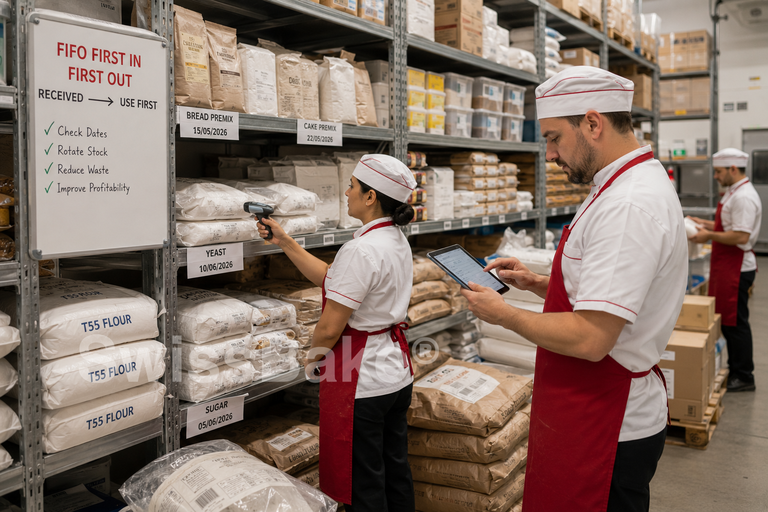
Effective bakery inventory management plays a critical role in controlling costs.
Poor inventory practices can result in:
- Expired ingredients
- Overstocking
- Emergency purchases at higher prices
- Production interruptions due to stock shortages
Track Ingredient Consumption Regularly
Recording ingredient usage daily helps identify unusual consumption patterns and potential wastage issues before they become significant problems.
Follow FIFO Inventory Practices
The First-In-First-Out (FIFO) method ensures older inventory is used before newer stock, reducing spoilage and expiration-related losses.
Improve Demand Forecasting
Accurate forecasting allows bakeries to purchase ingredients based on actual production requirements rather than estimates.
When inventory management is optimized, bakeries can significantly reduce wastage while improving cash flow and operational efficiency.
Reducing Production Time Without Affecting Product Quality
Production time directly influences bakery profitability.Longer production cycles require more labor hours, increase energy consumption, and limit production capacity. Improving workflow efficiency can reduce costs while allowing bakeries to produce more products within the same operating hours. Areas to evaluate include:
- Ingredient preparation processes
- Mixing efficiency
- Proofing schedules
- Baking workflows
- Cooling and packaging operations
For example, using consistent ingredients such as bread premix can eliminate several weighing and measuring steps, helping staff prepare dough more efficiently while maintaining quality standards.
Similarly, selecting specialized flour products such as 00 pizza flour for specific applications can improve dough handling and process consistency.
Reducing production time is not about rushing operations—it is about eliminating unnecessary delays and creating a smoother production workflow.
How to Reduce Labour Cost Through Operational Efficiency
Labor remains one of the largest expenses for most bakeries.While reducing headcount is rarely desirable, bakeries can focus on improving productivity and reducing inefficiencies to manage labor expenses more effectively.
Strategies to reduce labour cost include:
- Standardizing production procedures
- Cross-training employees
- Reducing manual weighing and measuring tasks
- Improving production planning
- Minimizing rework caused by production errors
The use of pre-formulated baking solutions can further simplify operations and reduce training requirements for new staff members.
Bread Improvers and Their Role in Cost Reduction
Many bakeries associate quality improvement solely with premium baking ingredients. However, process optimization tools can also help improve profitability.Bread improvers are commonly used to enhance dough performance, fermentation stability, volume, texture, and shelf life.
Benefits of Using Bread Improvers
The use of professional-grade bread improvers can help bakeries:
- Improve dough consistency
- Reduce batch-to-batch variation
- Minimize production failures
- Improve finished product quality
- Enhance process reliability
This contributes directly to lower bakery production costs while maintaining product standards.
How Bread Premix Solutions Help Control Bakery Production Cost?
Managing multiple raw materials can increase complexity and create opportunities for human error. A bread premix combines carefully balanced ingredients into a standardized formulation, helping bakeries streamline production.
Operational Benefits of Bread Premix
Using bread premix can help bakeries:
- Reduce ingredient handling
- Minimize weighing errors
- Improve recipe consistency
- Simplify staff training
- Reduce production variability
This is particularly valuable for growing bakeries that need consistent quality across multiple locations or production teams.
Preventing Batch Failures and Product Waste
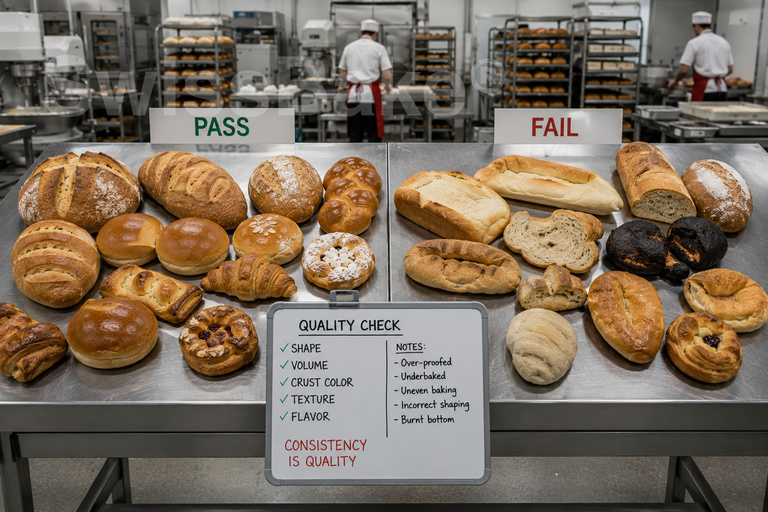
Batch failures are one of the most expensive problems in commercial baking.
A failed batch impacts:
- Ingredient costs
- Labor costs
- Utility expenses
- Production schedules
- Customer deliveries
Common causes of batch failures include:
Incorrect Ingredient Measurements
Even minor variations in ingredient quantities can significantly affect the final product. This is particularly common in confectionery and breakfast bakery products, where precise ingredient ratios are essential for achieving the desired texture, volume, and consistency.
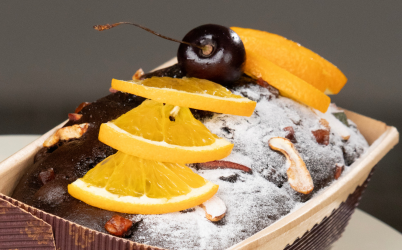
For example, when preparing cakes or brownies from scratch, slight deviations in ingredients such as leavening agents, sugar, fats, or liquids can result in products that are dense, unevenly textured, have poor volume, or fail to achieve the intended eating quality. Using a standardized solution such as a cake premix or brownie mix helps eliminate measurement errors by providing a pre-balanced formulation. This ensures consistent results across batches, reduces ingredient handling, simplifies production, and minimizes the risk of costly product rejections or rework.
Inconsistent Mixing
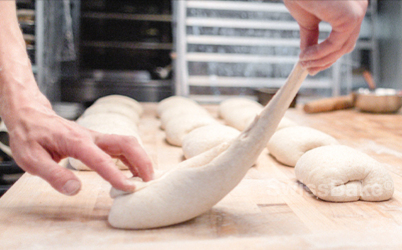
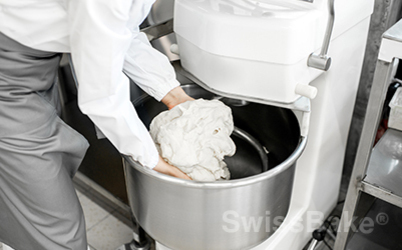
Mixing is a critical stage in bakery production, as it directly affects dough development, ingredient distribution, and final product quality. Variations in mixing time, speed, or operator techniques can lead to uneven dough structure, poor volume, and inconsistent texture.
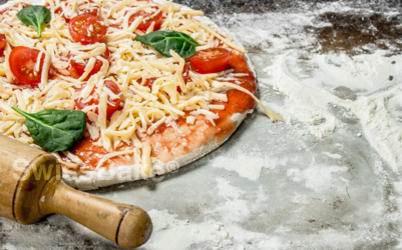
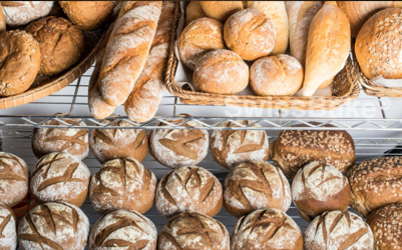
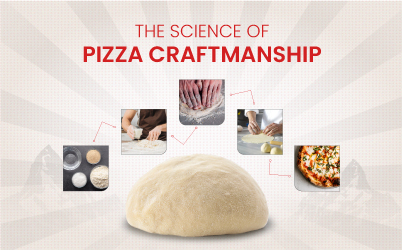
For products such as artisan breads and pizza bases, maintaining consistent dough characteristics is essential. Using specialty ingredients such as 00 pizza flour can help improve dough handling properties and provide greater consistency during mixing and processing, making production outcomes more predictable.
Variations in Fermentation Conditions
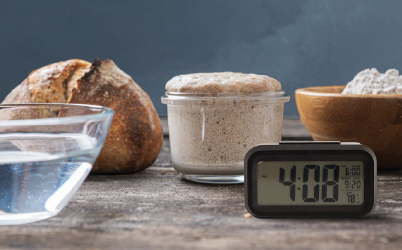
Fermentation is highly sensitive to factors such as temperature, humidity, proofing duration, and ingredient quality. Small changes in these conditions can affect dough strength, flavour development, volume, and crumb structure.
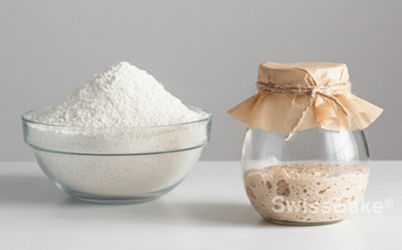
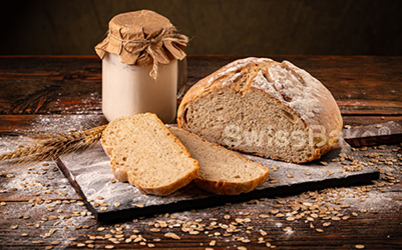
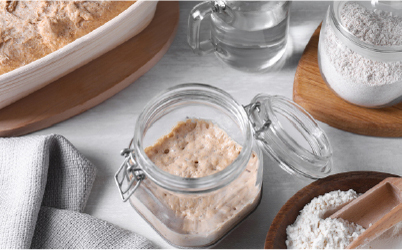
To improve consistency, many bakeries use ingredients such as sourdough powder, which helps deliver a more standardized flavour profile and fermentation performance. This allows bakers to achieve consistent results while reducing dependency on highly variable natural fermentation conditions.
Human Error During Production
Manual bakery operations involve numerous repetitive tasks, including ingredient weighing, mixing, scaling, shaping, and baking. Errors at any stage can lead to defective products, wasted ingredients, and production delays.
Common examples include using incorrect ingredient quantities, skipping process steps, inaccurate proofing times, or setting incorrect baking temperatures. Establishing standardized operating procedures, simplifying formulations, and using pre-formulated bakery ingredients can help reduce the likelihood of human error while improving overall production efficiency and product consistency.
- Recipe standardization
- Staff training
- Inventory control
- Process monitoring
- Reliable ingredient systems
Building a More Profitable Bakery in 2026
Controlling bakery production cost is no longer just about purchasing ingredients at lower prices. Sustainable cost reduction comes from improving operational efficiency throughout the production process.Bakeries that focus on recipe standardization, efficient bakery inventory management, reduced production time, lower wastage, and optimized labor utilization are better positioned to maintain profitability despite rising operational expenses.
Solutions such as bread premix, bread improvers, and other standardized baking ingredients can support these efforts by improving consistency and simplifying production workflows.
As the bakery industry continues to evolve, businesses that combine quality-focused production with efficient cost management will be best equipped to remain competitive, profitable, and resilient in a challenging market environment.