Matcha Trends and the Rise of Menu Innovation
Matcha has moved beyond its traditional association with tea and is increasingly appearing across modern food and beverage menus. Its distinctive flavour, vibrant colour, and versatility have helped it find a place in desserts, bakery products, cold beverages, and other contemporary menu formats.
For bakeries, cafés, and foodservice businesses, this growing interest presents an opportunity to think beyond introducing a single Matcha product. Instead, businesses can explore how one trending ingredient can be adapted across different formats to create a more varied and relevant menu.
This approach is particularly useful when developing menus around emerging consumer preferences. Rather than adding a trend simply because it is gaining attention, businesses can assess where an ingredient fits within their existing capabilities, which formats are most relevant to their customers, and how it can contribute to menu diversification.
Why Is Matcha Trending?
Matcha is gaining attention not only as a beverage but also as a versatile ingredient and flavour for modern menus.
- PREMIUM APPEAL: Its premium and aesthetic appeal comes from the distinctive green colour and association with speciality food and Japanese tea culture, giving familiar products a contemporary and elevated appearance.
- PERCIEVED HEALTH BENEFITS: The ingredient's healthy perception, meanwhile, is linked to its association with wellness and mindful consumption, further contributing to consumer interest.
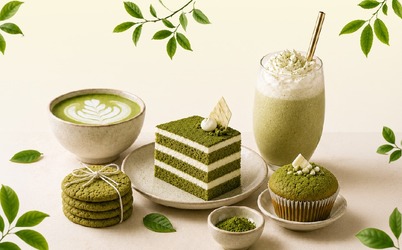
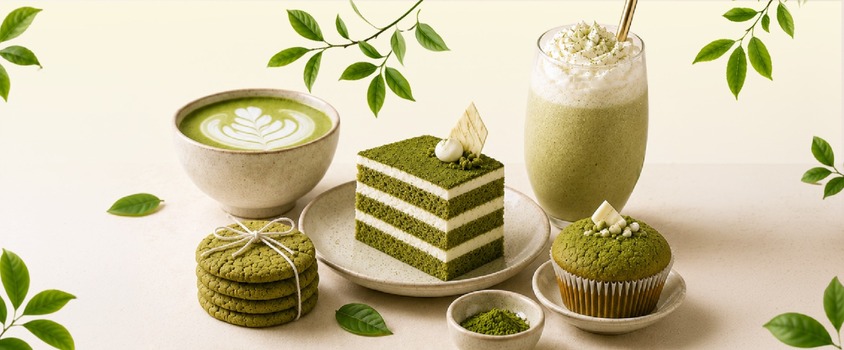
- VERSATILE USAGE: Beyond these attributes, creative applications are expanding matcha's presence across cakes, cookies, desserts, lattes, frappes, and other menu formats. This versatility allows businesses to experiment with different flavour combinations and presentations, making matcha a relevant ingredient for menu innovation and diversification.
Why Matcha Is Becoming a Stronger Menu Opportunity
The growing visibility of Matcha across food and beverage categories reflects a wider interest in distinctive flavours and visually recognisable ingredients. Matcha offers both characteristics, with an earthy flavour profile and a naturally vibrant appearance that can give products a recognisable identity.
Its appeal also comes from its flexibility. While Matcha beverages remain an important part of the category, the flavour can be incorporated into cakes, cookies, desserts, pastries, and other bakery applications.
For professional food businesses, this versatility creates an important distinction. A trending ingredient does not have to result in only one new menu item. Instead, it can become a starting point for developing several products that share a common flavour profile while offering different textures, formats, and consumption occasions.
This makes Matcha particularly relevant for businesses looking to refresh their menus without moving too far away from established product categories.
Building a More Versatile Matcha Menu
A well-planned matcha menu does not necessarily need to consist of entirely unfamiliar products. One practical approach is to introduce the flavour through formats customers already recognise and then explore more differentiated applications.
For bakeries, this could begin with familiar products such as cakes, cupcakes, and cookies. These formats provide an accessible way to introduce Matcha while allowing businesses to experiment with presentation, fillings, toppings, and flavour pairings.
Cafés and foodservice operators can approach the opportunity differently by incorporating Matcha into beverages alongside existing coffee, tea, and cold-drink offerings.
The result can be a broader Matcha menu built around different product categories rather than a single seasonal or limited offering.
This menu-first approach also allows businesses to consider practical factors such as production capabilities, serving formats, ingredient handling, consistency, and customer expectations before deciding which Matcha applications to introduce.
Matcha Desserts Across Bakery Menus
Matcha desserts offer one of the most flexible ways to introduce the flavour. It can be incorporated into familiar bakery formats while also providing opportunities for more contemporary product development.
Cakes and Sponge-Based Creations
Cakes and sponge-based products can provide a natural starting point for Matcha applications. A Matcha sponge can be used as a base for cakes, cupcakes, rolls, and layered desserts, giving businesses several ways to build variety around a single flavour.
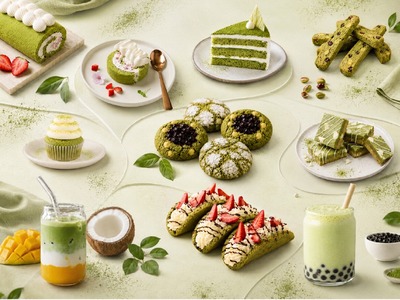
For example, Egg-Free Matcha Cupcakes with Chocolate Ganache provide a familiar individual-serving format, while a Matcha Cake Roll offers a different presentation using the same core flavour. More distinctive bakery concepts such as Matcha Bostock demonstrate how Matcha can also be incorporated into less conventional formats.
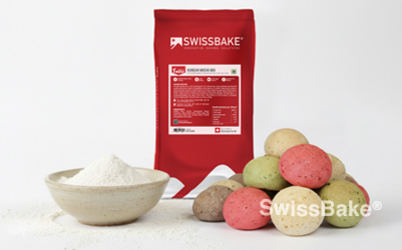
Using a standardized solution such as a matcha sponge cake mix can help businesses achieve greater consistency when introducing these applications. A pre-balanced formulation can simplify ingredient handling and help maintain similar results across production batches.
This can be particularly useful when a business wants to extend Matcha across several products without significantly increasing formulation complexity.
Cookies and Small-Format Desserts
Cookies and other small-format products offer another opportunity to incorporate Matcha into an existing bakery range. Their smaller serving size makes them suitable for bakery counters, cafés, gifting selections, and foodservice menus.
The same flavour can also be presented through different textures and formats. Matcha Crinkle Cookies and Matcha Thumbprint Cookie offer different cookie styles, while Matcha Blondies demonstrate how the flavour can be adapted into a soft, indulgent dessert format.
A standardized matcha cookie mix can support this type of menu development by providing a consistent base while allowing businesses to focus on shaping, finishing, inclusions, and presentation.
Matcha Beverages for Modern Café and Foodservice Menus
The Matcha opportunity extends beyond bakery products. Beverages remain an important application, particularly for cafés, restaurants, and foodservice businesses looking to introduce distinctive cold-drink options.
Moving Beyond Traditional Matcha Drinks
Matcha beverages can be adapted into formats such as iced lattes, frappes, and other contemporary cold drinks. Pairing Matcha with complementary ingredients can further expand the menu and create different flavour experiences.
For example, Coconut Mango Matcha Iced Latte combines Matcha with a fruit-led flavour profile, while Boba Matcha Tea Frappe introduces a more indulgent beverage format with an additional textural element.
A standardized matcha frappe mix can help businesses develop such applications with greater consistency while simplifying preparation. This can be particularly relevant for foodservice environments where beverages need to be prepared efficiently across multiple service periods.
The broader opportunity is to treat Matcha as part of the beverage menu rather than limiting it to one traditional preparation.
Exploring Matcha Flavour Across Different Menu Formats
One of the reasons Matcha can support menu innovation is its ability to work across different product categories. Its characteristic matcha flavour can complement sweet bakery products, chocolate, fruit, dairy-based preparations, and beverages.
This gives product development teams room to experiment with familiar and less conventional combinations.
For example, a bakery may use Matcha with chocolate in a cupcake or dessert, while another business may pair it with fruit in a cold beverage. The same Matcha flavour can therefore create different experiences depending on the application.
Businesses can also explore more creative formats when they want to differentiate their offerings. Matcha Tacos demonstrate how the flavour can be taken into a less conventional dessert format, while Matcha Cranberry Cracker shows another interpretation that moves beyond typical cakes and cookies.
The objective, however, does not need to be innovation for its own sake. A balanced menu can combine familiar Matcha products that are easy for customers to understand with a smaller number of distinctive offerings designed to generate curiosity.
Menu Diversification Through Trending Ingredients
Following trending ingredients can provide inspiration for product development, but successful menu development requires more than simply adopting an ingredient because it is popular.
Businesses need to consider whether the ingredient can work across their existing product categories and whether the resulting products are relevant to their customers.
Matcha demonstrates how one ingredient can potentially connect several parts of a menu. A bakery could offer Matcha cakes alongside cookies and smaller desserts, while a café could extend the same flavour into beverages.
This creates a connected menu strategy rather than a collection of unrelated trend-driven products.
Before introducing new applications, businesses can consider questions such as:
- Which existing menu categories can accommodate the ingredient?
- Which formats are most relevant to the target customer?
- Can the ingredient be used across multiple products?
- Can the products be produced consistently at the required scale?
- Do the new offerings complement the existing menu?
- Can the same ingredient support both familiar and innovative applications?
These considerations can help businesses distinguish between a short-lived trend and an ingredient with genuine menu potential.
The Role of Standardized Solutions in Menu Innovation
Once a business identifies opportunities for an ingredient such as Matcha, the next consideration is how those applications can be produced consistently. Introducing multiple products around one flavour can increase formulation and preparation requirements, particularly when each product requires separate ingredient measurements and handling.
Standardized solutions can help simplify this process by providing a consistent base for specific applications. For example, a matcha sponge cake mix can support cake and sponge-based products, while a matcha cookie mix can provide a standardized base for different cookie formats.
For beverage applications, a matcha frappe mix can help streamline preparation across service periods. These solutions can reduce the complexity associated with handling multiple individual ingredients while helping businesses maintain consistency as they expand their menu.
The value of such solutions is therefore not simply the ingredient itself, but how they can support businesses in translating a flavour trend into practical, repeatable menu applications.
From Matcha Trends to Long-Term Menu Opportunities
The strongest response to a food trend is not necessarily to introduce as many new products as possible. Instead, businesses can assess whether the trend offers enough versatility to become a meaningful part of their menu.
Matcha provides opportunities across cakes, sponge-based products, cookies, desserts, and beverages, allowing businesses to approach the ingredient according to their production capabilities and customer preferences.
Standardized ingredient solutions can further support this process by helping businesses maintain consistency while developing different applications. Rather than creating a completely new formulation for every product, suitable mixes and other baking solutions can simplify preparation and ingredient handling while providing a reliable starting point for menu development.
For professional bakeries and foodservice operators, this can make it easier to test new applications and respond to changing customer preferences without unnecessarily complicating production.
Ultimately, Matcha's potential lies not simply in its popularity, but in its versatility. Businesses that approach Matcha trends with a menu-first perspective can explore where the flavour fits best, identify opportunities across multiple categories, and create offerings that balance familiarity with innovation.
As consumer preferences continue to evolve, emerging ingredients such as Matcha can provide inspiration for businesses looking to refresh their menus, diversify their offerings, and develop new products around flavours that capture customer interest.
Explore Detailed Matcha Recipes
The Matcha applications discussed above can be adapted across bakery, dessert, and beverage menus. Explore the detailed recipes below for the complete preparation process and formulation: